Choosing the Right Modern Script: A Deep Dive into Bettside and Its Unique Design
Selecting the perfect typography for a design project often feels like navigating a maze of conflicting styles. Whether you are planning a wedding, rebranding a boutique business, or crafting a personal greeting card, the font you choose sets the emotional tone before a single word is read. In recent years, modern script fonts have surged in popularity, moving away from the rigid, calligraphic rules of the past toward something more organic and expressive. Among these emerging options, Bettside has gained attention for its distinctive character. It is not merely another decorative typeface; it represents a specific shift in how designers approach handwritten aesthetics.
To make an informed decision about whether this font fits your needs, it is essential to look beyond the initial visual appeal. You must evaluate its structural integrity, its versatility across different media, and how it compares to other modern script categories. This analysis explores what makes Bettside distinct, where it excels, and when you might be better served by a different typographic solution.
Understanding the Distinctive Baseline of Bettside
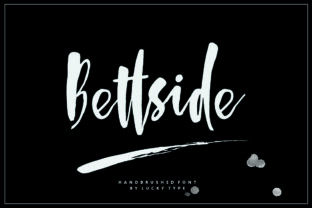
The most defining characteristic of Bettside is its irregular baseline. Traditional serif or sans-serif fonts rely on a straight, horizontal alignment that creates a sense of order and stability. Even standard cursive scripts usually maintain a consistent line height to ensure legibility. Bettside breaks this convention intentionally. The letters appear to sit at varying heights, mimicking the natural rhythm of a hand writing quickly without worrying about strict alignment.
This irregularity is what gives the font its trendy and feminine style. It avoids the stiffness that can sometimes plague digital calligraphy, offering instead a fluid, breathing quality. For projects aiming to convey authenticity, warmth, or a personal touch, this feature is invaluable. However, understanding this trait requires acknowledging the tradeoffs involved. While the wavy baseline adds charm, it can impact readability if used for body text or long paragraphs. It is designed primarily for display purposes—headlines, titles, and short phrases where the visual impact outweighs the need for rapid scanning.
The Intersection of Trend and Timelessness
Design trends move in cycles, and the "modern script" aesthetic has become a staple in contemporary branding. Unlike vintage scripts that attempt to replicate 19th-century copperplate engraving, Bettside embraces a looser, more casual interpretation. It feels current because it rejects perfection. This makes it particularly appealing for audiences aged 20 to 50 who value brands that feel human and accessible rather than corporate and polished.
When evaluating Bettside, consider the context of your audience. If your goal is to create a sense of intimacy, such as in wedding invitations or thank-you cards, the imperfect lines invite the reader in. They suggest that a real person created the message. Conversely, if your project requires a high degree of formality or strict brand consistency across global markets, the irregular baseline might introduce too much variability.
Evaluating Use Cases and Practical Applications
The versatility of a font is often determined by the range of scenarios in which it performs well. Bettside shines in specific niches where its unique personality can be fully utilized. Understanding these best-fit situations helps designers avoid common pitfalls, such as using a display font for functional UI elements.
- Wedding Invitations: This is perhaps the most natural home for Bettside. The elegant yet relaxed flow complements the romantic nature of weddings. The irregular baseline adds a touch of whimsy that distinguishes the invitation from mass-produced templates.
- Branding and Logos: For small businesses, boutiques, or lifestyle brands, a logo needs to be memorable. Bettside offers a feminine and trendy look that can help a brand stand out in crowded marketplaces. It works exceptionally well for beauty products, artisanal food labels, or creative agencies.
- Greeting Cards and Quotes: Social media graphics and printed quotes benefit from the emotional resonance of the font. When paired with ample white space, the script draws the eye immediately, making it ideal for Instagram posts or Pinterest pins.
- Thank You Cards: Similar to invitations, these require a personal touch. The handwriting style of Bettside bridges the gap between formal stationery and a casual note, making the recipient feel valued.
However, the same features that make Bettside excellent for headlines can limit its utility elsewhere. It is generally unsuitable for legal documents, technical manuals, or any interface where clarity is paramount. The fluctuating baseline can cause eye strain over long periods of reading. Therefore, a balanced approach often involves pairing Bettside with a clean, neutral sans-serif font. This combination allows the script to provide the emotional hook while the secondary font handles the informational heavy lifting.
Comparative Analysis: How Bettside Stands Against Alternatives
When researching modern script fonts, designers often encounter a wide spectrum of options. Some prioritize strict calligraphic rules, while others focus on brush strokes or marker effects. To determine if Bettside is the right choice, it helps to compare it against these broader categories.
Formal Calligraphy vs. Casual Scripts
Many traditional script fonts mimic the precise movements of a fountain pen or quill. These fonts often feature thick downstrokes and thin upstrokes, creating a high-contrast look that feels sophisticated but somewhat rigid. Bettside differs by prioritizing a more natural, less controlled motion. While formal scripts convey luxury and heritage, Bettside conveys approachability and modernity. If your project aims for a classic, old-world feel, a formal script might be superior. If the goal is to feel fresh and contemporary, Bettside is likely the stronger candidate.
Brush Fonts vs. Irregular Scripts
Another popular category includes brush fonts, which simulate the texture of paint applied with a broad brush. These often have visible bristle marks and uneven ink distribution. Bettside shares the organic feel of brush fonts but typically maintains a cleaner, smoother line weight. This distinction matters when printing on textured paper or using small sizes. Brush fonts can sometimes lose detail or look muddy when scaled down, whereas Bettside's cleaner lines often retain their shape better at smaller dimensions, provided the baseline irregularity does not compromise legibility.
Standard Cursive vs. Decorative Display
There are also fonts that simply connect letters in a cursive manner without the artistic flair of a true script. These are often designed for readability and lack the stylistic "wow" factor. Bettside falls firmly into the decorative display category. It sacrifices some level of standard legibility for aesthetic impact. Readers looking for a font to write entire sentences in should look elsewhere. Those needing a powerful visual statement for short text will find Bettside highly effective.
Decision Factors: Weighing Strengths and Limitations
Making the final choice between Bettside and other resources comes down to a careful assessment of your specific project requirements. There is no single "best" font; there is only the best fit for the task at hand.
Strengths of Bettside
The primary strength of this font is its ability to evoke emotion instantly. The feminine and trendy style appeals to a broad demographic seeking a modern aesthetic. Its irregular baseline provides a unique visual signature that prevents the design from looking generic. Additionally, its versatility in digital and print formats makes it a valuable asset for multi-channel campaigns.
Potential Limitations
The main limitation remains the baseline. In layouts with multiple lines of text, the jagged alignment can create a disjointed appearance if not managed carefully. Designers must pay close attention to leading (line spacing) to ensure the descending and ascending parts of the letters do not collide. Furthermore, accessibility considerations are crucial. Users with visual impairments may struggle with the non-standard alignment. Always test your designs for readability before finalizing the typeface.
When to Choose Another Option
You might consider alternatives if your project involves extensive body copy, international audiences requiring high legibility, or a brand identity that demands strict uniformity. In those cases, a more structured script or a clean geometric sans-serif would serve the purpose better. Similarly, if your design theme is strictly minimalist, the flourish of Bettside might be too distracting.
Final Thoughts on Typography Selection
The journey to selecting the right font is one of balancing art and function. Bettside offers a compelling option for designers and creators looking to inject a modern, feminine, and slightly chaotic energy into their work. Its irregular baseline is not a flaw but a feature that defines its character.
By understanding its strengths and limitations, you can deploy Bettside effectively in wedding invitations, logos, and greeting cards where its unique voice will shine. Remember that typography is a tool for communication. When used wisely, it enhances the message; when used indiscriminately, it distracts. Take the time to test Bettside alongside other options in your specific context. Only through practical evaluation can you determine if this modern script is the perfect partner for your next creative endeavor.